Monday, May 29, 2006

Hybridity - Wikipedia, the free encyclopedia


So does this mean soon my guff will be summarized in 101-type lectures - my arriviste wiki moment (!!!):

Hybridity - Wikipedia, the free encyclopedia:
"Hybridity as a rhetorical Cul-de-sac.
The development of hybridity theory as a discourse of anti-essentialism marked the height of popularity in academic 'hybridity talk'. However the usage of hybridity in theory to eliminate essentialist thinking and practices (namely racism) failed as hybridity itself is prone to the same essentialist framework and thus requires definition and placement. A number of arguments have followed in which promoters and detractors argue the uses of hybridity theory. Much of this debate can be criticised as being excessively bogged down in theory and pertaining to some unhelpful quarrels on the direction hybridity should progress e.g. attached to racial theory, post-colonialism, cultural studies, or globalization. Sociologist Jan Nederveen Pieterse (2004) highlights these core arguments in a debate that promotes hybridity. Professor of Cultural Studies John Hutnyk stands out as another academic engaging with further development of hybridity theory in his consistent critique of hybridity as politically void."
.

[My-ci] My Research on Creative Industries

Ned Rossiter makes some good points in discussion of why his research is relevant... was for a job talk, but subsequently sent to MyCI - have a look at the whole thing, its not too long...

[My-ci] My Research on Creative Industries:
"In studying the relations between labour-power and the creative
industries my interest has been twofold: first, at a theoretical and
political level, I have sought to invent concepts and methodologies
that address the question of the organisation of labour-power within
network societies and informational economies. Here, my research
relates to and has been informed by what the political philosopher
Paolo Virno calls 'the thorniest of problems: how to organize a
plurality of 'social individuals' that, at the moment, seems
fragmented, constitutionally exposed to blackmail - in short,
unorganizable?'[3] Out of an interest in new forms of agency in the
creative industries, I have investigated the political concept of
"organised networks", which can be understood as emergent
institutional forms whose mode of organising sociality is immanent to
networked forms of communications media.[4]

Secondly, my research has investigated the double-edged sword of
precarity within post-Fordist economies, of which the creative
industries belong as a service economy modulated through
informational relations.[5] The precarity of labour-power within the
creative industries is double-edged in the sense that it enables the
attractions of flexibility - the escape from the Fordist time of the
factory and the firm - yet accompanying these relative freedoms is
the dark side of what researchers such as Beck, Lash, Urry and Butler
have variously called uncertainty, insecurity, risk and complexity.
Such fields of inquiry resonate with the concept of organised
networks, both of which are rarely addressed from within creative
industries research "

Rossiter- May 2006 (Thanks Ned)
.

Saturday, May 20, 2006

maria_technosux's Journal


maria_technosux's Journal: "7:12pm: Intellectual guilt and take-no-prisoners
Sometimes I feel a little guilty for bashing avant garde whiteboys. They deserve it, of course, but I'm a softy deep down inside and I feel like I'm picking an easy target. I think it's because they're so damn infantile (intellectually lazy) that makes me feel like I'm picking on the lil'kids.

On the other hand, no one let me off the hook, so why the fuck should I cut them some slack? Buncha self-satisfied soggy whitebread kids, grrr!

Compared to Hutnyk's _Critique of Exotica_ I'm relatively modest. When Hutnyk bashes Kula Shaker's Crispian 'India is the Ibiza of concepts', Mills... 'I don't cut a deal' doesn't quite capture it.

http://www.leftcurve.org/LC22WebPages/souvenirs.html "

Thanks Maria - but scary news stories abound - like the caption from the pic above which says: "The Jeevas have split up.Kula Shaker have reformed. It's like 1996 all over again." - The Jeevas were Mill's failed project of 2003, lets all tremble with anticipation at the return of the nasty shakers... stifled yawn, etc.

.

Lelaki Komunis Terakhir (The Last Communist)

The Last Communist (2006)

Meanwhile, NOT in Malaysia, since its been banned, this film tells the story of the early life of Malay Communist Party leader, Chin Peng:

"Synopsis A semi-musical documentary inspired by the early life and legacy of Chin Peng, exiled leader of the banned Communist Party of Malaya. Interviews with the people in the towns he lived in from birth to national independence are interspersed with specially composed songs in the mould of old-fashioned propaganda films".

Official Film website here.

"This is a hybrid documentary, not because it combines fact and fiction, but because it combines testimony with song. Chin Peng (real name: Ong Boon Hua) was born in 1924 and is the last leader of the banned Communist Party of Malaya. He now lives in Thailand because the Malaysian government does not allow him to return, despite his repeated attempts to go through the courts.
The Communist Party of Malaya was set up in 1930 (in a ceremony attended by Ho Chi Minh) and recruited from the working class (mainly ethnic Chinese) exploited by colonial British economic interests. The CPM played an active role in the anti-Japanese resistance movement during World War Two, and cooperated with the British. But once the Japanese surrendered, the communists wanted to take over the country for themselves. This is when they and the British became enemies once again. 1948-60 is the era known as the Emergency, the longest and bloodiest undeclared war in Commonwealth history. ..."

Director's blog on the Ban here.

Red Salute.
.

Struggling with identity?


Hari Kunzru doing the rounds, this week he's in KL (a British Council gig, but see also PEN)...

This 'cool dude' report is from "The Star" 14 May 2006 (excerpt) :

Struggling with identity?:

"Award-winning author and all round Renaissance man Hari Kunzru was in the country on Tuesday and shared his thoughts on writing and how he stared at a cursor for a month with SHARON BAKAR.

A sense of dislocation makes for good art, says Hari Kunzru.

I'D read enough of Hari Kunzru's journalism to know that he is something of a polymath with an interest in everything from literature, art and music to philosophy, technology and politics.
His reputation for being an extremely 'cool dude' had also preceded him: besides being one of Britain's hottest young novelists, he's written for some of the trendiest magazines (Wired, Wallpaper), spins vinyl as a DJ, and apparently knows how to mix a mean martini cocktail.
For all that, Kunzru is remarkably down-to-earth and approachable, as I discovered when he was in Kuala Lumpur last week on a visit sponsored by the British Council... "

"...Noise is a compilation of surprisingly dark short stories exploring the implications of an increasingly wired world. “I enjoy opening up a little world that works according to its own logic,” Kunzru says, adding that he hopes to write more short stories after the publication of his third novel next May..."

http://thestar.com.my/lifestyle/story.asp?file=/2006/5/14/lifebookshelf/14220911&sec=lifebookshelf

powered by Clarissa - thanx
.

Wednesday, May 17, 2006

"I am a socialist, I will infect you".


I remember someone at a Rally Against Capitalism saying something like this to gales of laughter. Its a quote that, well, remains amusing here under the hand of Hugo Chavez, who is currently visiting London and offering some of us cheap heating oil.

The shivvers are not in the spines of those looking for a warm hearth however. Ha ha ha.

That said, I do want to note that I personally am not someone who wants to be identified as a socialist - my terminal condition is much much worse than that! Look out, I will try to sell you little red books, just like the Panthers did nearly 40 Years ago.

Lal Salaam.
.

Monday, May 15, 2006

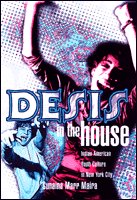
Sunaina Marr Maira: Desis in the House


Sunaina Marr Maira: Desis in the House: "Desis in the House
Indian American Youth Culture in New York City

Sunaina Marr Maira

'Desis in the House is what cultural studies ought to be. Sunaina Maira gets deep inside of the social and cultural worlds of second generation Indian Americans and illuminates the links between the local and global, history and nostalgia, nationalism and cosmopolitanism. Maira's perceptive insights into the complex and fluid styles, music, dances, desires and dreams of desi youth will force us all to think about cultural identities in new ways.'
- Robin D. G. Kelley, author of Yo' Mama's DisFunktional! Fighting the Culture Wars in Urban America

She sports a nose-ring and duppata (a scarf worn by South Asian women) along with the latest fashion in slinky club wear; he's decked out in Tommy gear. Their moves on the crowded dance floor, blending Indian film dance with break-dancing, attract no particular attention. They are just two of the hundreds of hip young people who flock to the desi (i.e., South Asian) party scene that flourishes in the Big Apple.

New York City, long the destination for immigrants and migrants, today is home to the largest Indian American population in the United States. Coming of age in a city remarkable for its diversity and cultural innovation, Indian American and other South Asian youth draw on their ethnic traditions and the city's resources to create a vibrant subculture. Some of the city's hottest clubs host regular bhangra parties, weekly events where young South Asians congregate to dance to music that mixes rap beats with Hindi film music, bhangra (North Indian and Pakistani in origin), reggae, techno, and other popular styles. Many of these young people also are active in community and campus organizations that stage performances of "ethnic cultures."
In this book Sunaina Maira explores the world of second-generation Indian American youth to learn how they manage the contradictions of gender roles and sexuality, how they handle their "model minority" status and expectations for class mobility in a society that still racializes everyone in terms of black or white. Maira's deft analysis illuminates the ways in which these young people bridge ethnic authenticity and American "cool."

Excerpt

Read an excerpt from Chapter 1 (pdf).


Reviews
"Sunaina Maira guides us into the bog of nostalgia where beleaguered immigrants of color forge a memory that is at odds with their homeland, but also with the dreams of their home boys and home girls. An honest ethnography gives us ample evidence that nostalgia is a feint. Rather than leave us with this conclusion alone, Maira posits something called critical nostalgia, and you'll find out what that is when you read this important book."—Vijay Prashad, author of Everybody Was Kung Fu Fighting: Afro-Asian Connections and the Myth of Cultural Purity"

Sunday, May 14, 2006

I remember / je me souviens

I remember / je me souviens: "Wednesday, March 29, 2006
I remember wondering why Cinderella's slipper didn't change back at midnight. I still do.


posted by william 10:15 PM"